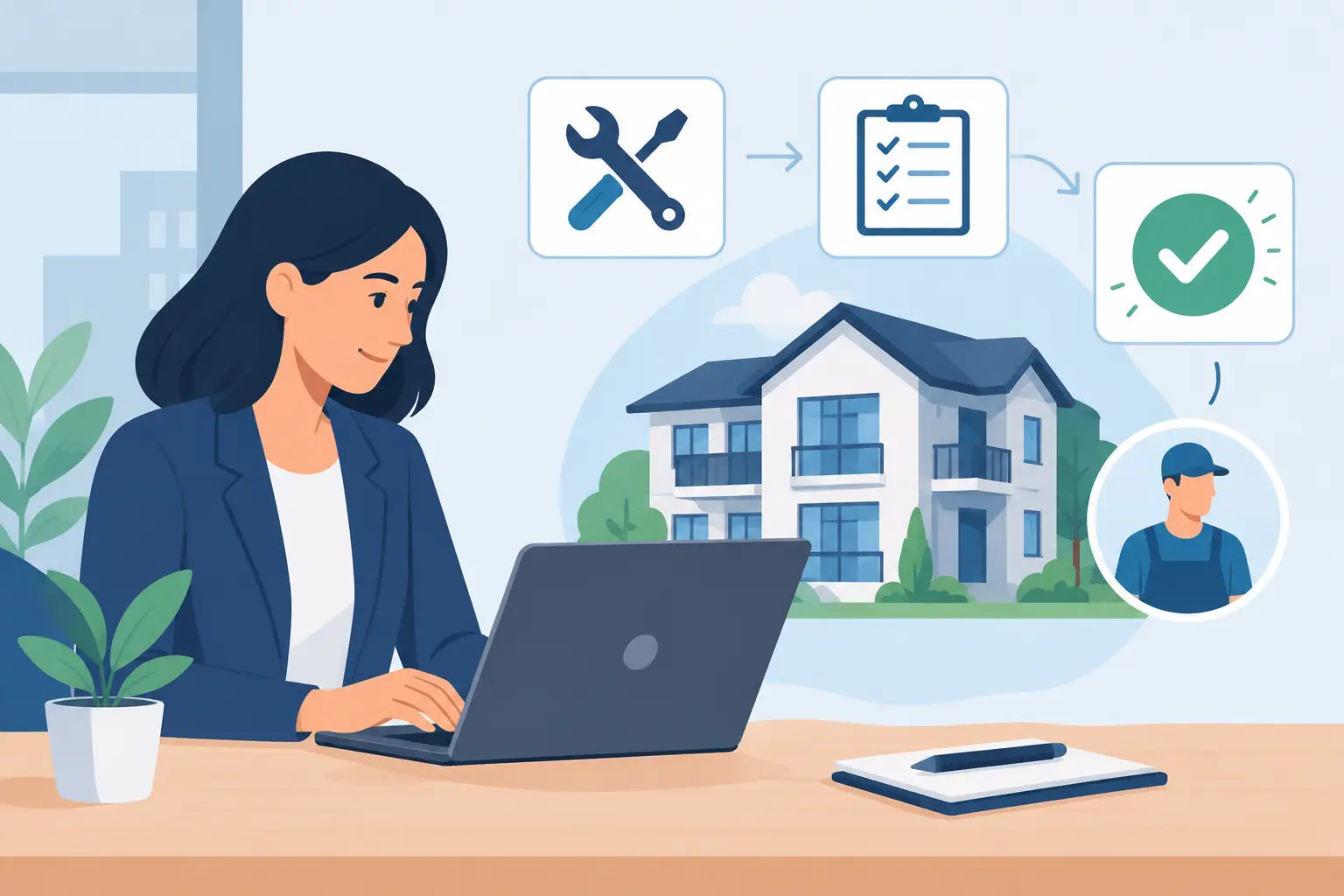
A repair approval should not require a property manager to search email threads, text a vendor for a revised quote, forward screenshots to a board member, then wonder whether anyone approved the work. Yet that is how routine maintenance gets delayed across otherwise well-run portfolios.
The best tools for repair approvals replace that chase with a documented decision path. They connect the original request, inspection findings, vendor bids, approval limits, communications, invoices, and job updates in one shared workflow. The result is not simply faster clicks. It is faster repairs, clearer accountability, and fewer uncomfortable conversations about who authorized what.
Why repair approvals break down
Approval friction usually starts before a quote is even submitted. A resident reports an issue, a technician diagnoses it, and a manager requests a bid. From there, the details often scatter across maintenance software, email, text messages, accounting tools, and board portals. Each handoff introduces a chance that someone sees an outdated estimate or misses an urgent update.
For a property manager, that fragmentation creates administrative drag. For vendors, it means waiting for a go-ahead while holding time on the schedule. For boards and owners, it creates uncertainty about cost, scope, and whether the repair is truly necessary. In a real estate transaction, it can put a closing timeline at risk.
The right approval tool creates one source of truth. Everyone authorized to participate can see the request, supporting documentation, current status, and next action without recreating the story from scratch.
The best tools for repair approvals share these capabilities
There is no single best fit for every portfolio. A small owner-operated company may prioritize simple mobile approvals, while a regional management company may need multi-level authorization, accounting integration, and board-ready reporting. Still, the strongest systems solve the same operational problems.
Centralized requests, bids, and repair evidence
An approval decision is only as good as the information behind it. A useful system keeps the maintenance request, photos, videos, inspection notes, scope of work, and vendor estimates together. Approvers should not need to compare attachments from several email threads to determine whether a $900 repair became a $1,400 repair or whether the recommended scope changed.
Mobile access matters here. Field technicians and vendors need a practical way to upload findings from the property, while managers need a clear view of that evidence from the office or while moving between sites. AI-powered inspection workflows can add value when they help standardize observations and flag repair needs, but they should support professional judgment rather than obscure it.
Configurable approval rules
Not every repair deserves the same approval path. A minor plumbing adjustment may fall within a manager's spending limit. A capital expense, emergency remediation job, or repair above a board threshold may require additional review. The tool should route work based on property, cost, category, urgency, owner preference, or other rules your organization already uses.
This is where generic task apps often fall short. They can assign a task, but they may not understand the difference between a work order that needs one manager's approval and a proposal that requires bids, an owner decision, and a documented board vote. Purpose-built property maintenance workflows reduce the need for people to remember exceptions manually.
The best setup also preserves flexibility. Emergency work cannot wait for a committee meeting when water is actively damaging a unit. Your approval process should allow authorized teams to proceed, document the emergency rationale, and notify the appropriate stakeholders immediately afterward.
Real-time status and accountable communication
Approvals stall when participants cannot tell where a job stands. Did the vendor submit the bid? Is the manager reviewing it? Was it sent to the board? Did someone approve only part of the scope? A clear status model eliminates these questions.
Look for tools that show approval stages in real time and record the decision, decision-maker, timestamp, and comments. Notifications should prompt action without flooding inboxes. A vendor should know when a proposal is approved and ready to schedule. A manager should see when a board member has a question. An owner should be able to review the relevant documents without being pulled into unrelated internal conversations.
This visibility protects relationships as much as it protects timelines. When a resident asks why a repair has not started, the management team can provide a factual update instead of chasing people for one.
Vendor coordination after approval
Approval is a midpoint, not the finish line. A tool that captures a yes but does not move work into scheduling, dispatch, and completion tracking still leaves teams to manage the most time-sensitive steps elsewhere.
A stronger workflow converts an approved quote into an active job. The vendor receives the authorization, scheduling details, access instructions, and scope. Technicians post updates from the field. Managers can see whether work is scheduled, underway, delayed, or complete. Final photos, completion notes, and invoices remain attached to the same record.
That continuity matters when a repair expands after work begins. Rather than starting another disconnected email chain, the team can submit a change request against the original job and route it through the appropriate approval level.
Financial controls without invoice friction
Repair approvals and invoice approvals should not live in separate realities. When the approved scope, not-to-exceed amount, and final invoice are disconnected, managers spend time reconciling basic facts that the system should already know.
The best platforms create a traceable path from request to bid to authorization to invoice. They make exceptions visible: an invoice above the approved amount, a bill without a documented approval, or a completed job missing required photos. API integrations with accounting and other operational systems can reduce duplicate entry, but only if the core maintenance record remains clear and trustworthy.
Do not confuse financial control with adding unnecessary gates. Too many approval steps can cost more than they save, especially for recurring repairs. Set thresholds that match risk, then use reporting to review patterns, vendor performance, and spend over time.
How to evaluate repair approval software
Start with your current failure points rather than a feature checklist. If your biggest problem is board decisions taking two weeks because information arrives in pieces, prioritize a board-friendly review experience and complete repair packets. If vendor follow-up consumes hours every day, prioritize automated status updates, bid submission, and scheduling coordination.
During a product evaluation, walk through a real scenario from your portfolio. Use a maintenance request with photos, multiple bids, a cost threshold, and an invoice that differs from the original estimate. Ask whether every stakeholder can complete their part without relying on side-channel email or text messages.
Pay close attention to permissions. Boards, owners, vendors, technicians, managers, and accounting teams need different views and actions. Broad access can create confusion or expose information that should remain internal. Overly restrictive access forces managers to become the human bridge for every question. The right tool makes each stakeholder self-sufficient within the boundaries of their role.
Reporting deserves the same scrutiny. Leadership should be able to measure approval cycle time, aging bids, jobs delayed after approval, vendor response times, invoice exceptions, and repair spend by property or category. Those metrics turn maintenance operations from a stream of urgent requests into an area that can be managed and improved.
A unified workflow changes the approval experience
For management companies, one connected workflow reduces administrative overhead and creates portfolio-level control. For property managers, it means fewer calls chasing signatures and updates. For vendors and field technicians, it means clearer authorization and less dead time between diagnosis and scheduled work. For boards, it provides the context needed to make defensible decisions. For real estate teams, it keeps inspection repairs and punch-list work moving toward the closing date.
ON Property Technologies brings these participants into a shared operating environment through workflows built for requests, bids, approvals, scheduling, job updates, invoices, inspections, and reporting. That multi-stakeholder structure matters because repair approvals rarely fail at one desk. They fail in the gaps between people and systems.
The most effective approval process feels almost uneventful: the right person receives the right information, makes a documented decision, and the work moves forward. Build for that standard, and your team can spend less time asking for status and more time delivering repairs that residents, owners, and clients can count on.