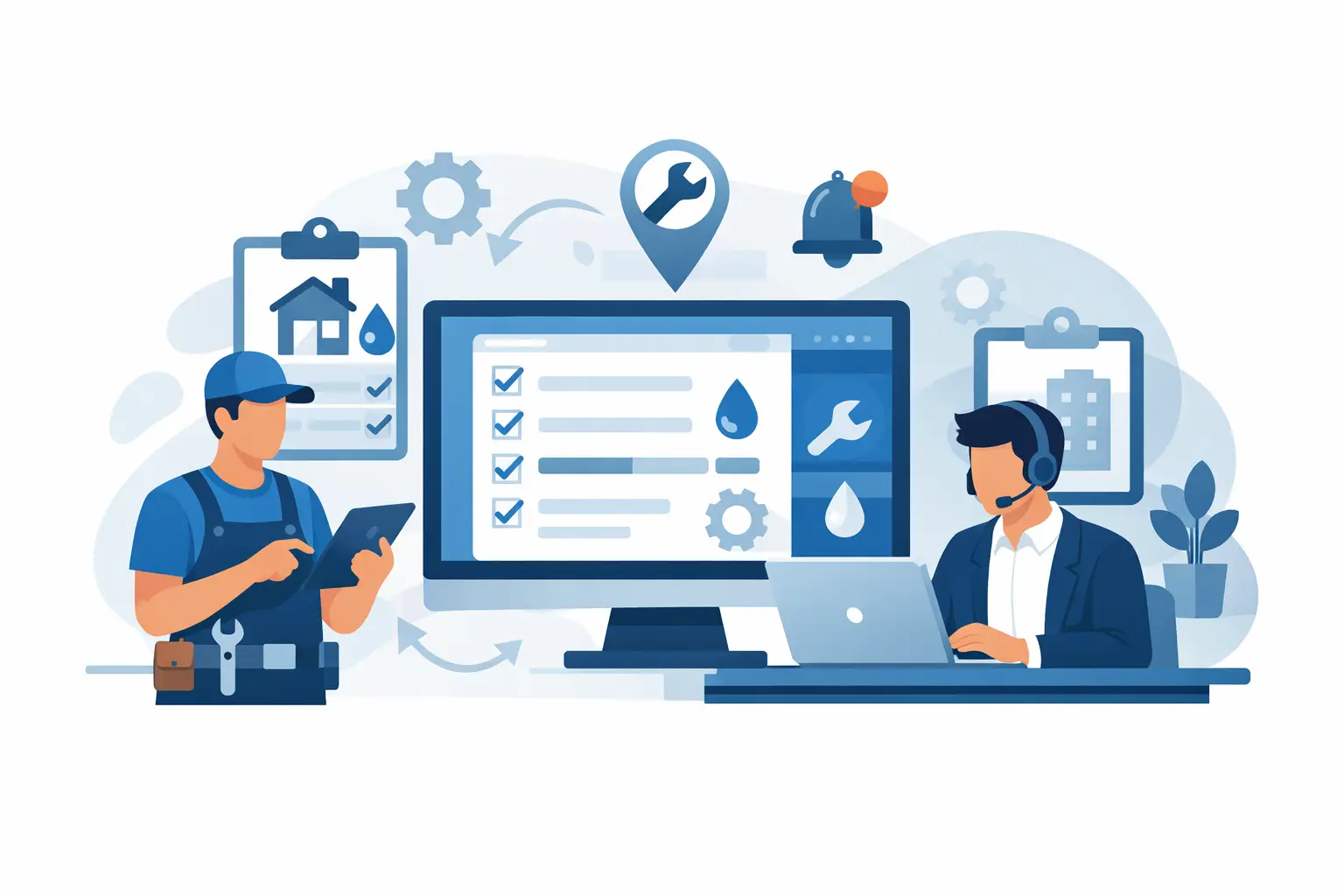
A missed maintenance request rarely starts as a major failure. It starts as a voicemail, a text message, an email forwarded to the wrong person, or a resident report with no clear owner. By the time someone asks for an update, the property manager is chasing a vendor, the board wants answers, and the invoice arrives without the documentation needed for approval. A maintenance request tracking system replaces that uncertainty with a structured, shared process from the first report through final payment.
For property-management organizations, that structure is not simply a convenience. It is how teams protect response times, reduce administrative work, document decisions, and maintain confidence across every property and stakeholder.
What a Maintenance Request Tracking System Should Do
At its core, a maintenance request tracking system records an issue, assigns responsibility, and preserves a complete history of what happened next. But basic ticket logging is not enough for real property operations. Maintenance work involves more than a request and a completed checkbox. It often requires access coordination, vendor outreach, bids, approvals, changing schedules, photos, invoices, and updates for residents, owners, boards, or transaction teams.
A useful system keeps those actions connected to the same job record. A manager should be able to see when the request was submitted, who reviewed it, which vendor accepted it, what work was proposed, whether approval was required, and what documentation supports the final invoice. Vendors and technicians should see the scope, contact details, site information, and next required action without sorting through separate email threads.
That shared record becomes the operational source of truth. Instead of asking, “Who has the latest update?” every stakeholder can work from the same current status.
Where Fragmented Workflows Create Delays
Most maintenance delays are not caused by a technician turning a wrench too slowly. They are caused by handoffs. A manager sends a request by email. A vendor responds by text. A proposal is attached to another email. A board approval happens in a separate portal or meeting. Then an invoice is submitted with limited proof that the requested work matches the approved scope.
Each disconnected step adds time and creates room for error. The manager spends hours checking status, re-entering information, and answering questions that a well-managed workflow should answer automatically. The vendor loses time waiting for clarification or approval. The board sees incomplete information and may delay a decision. Residents experience a longer repair window, even when qualified help is available.
The operational cost compounds across a portfolio. A few minutes of manual follow-up on each request can become a substantial burden when teams manage hundreds of units, multiple communities, recurring inspections, and urgent repairs at once.
The Workflow That Keeps Every Stakeholder Moving
The strongest systems support the full maintenance lifecycle, not just the intake form. The workflow should be flexible enough for a simple leaking faucet and structured enough for a major capital repair.
1. Capture the Request With the Right Context
A complete request starts with more than a brief description. It should include the property and unit, issue category, priority, photos or video when appropriate, access details, requester contact information, and any known safety concerns.
Standardized intake matters because it reduces the back-and-forth before work can begin. If a vendor arrives without gate instructions, a unit number, or a clear description of the issue, the job may be delayed before diagnosis even starts. For emergency requests, clear intake also helps property teams prioritize real risks instead of relying on fragmented verbal updates.
2. Route Work to the Right Person or Vendor
Once received, the request needs an accountable owner. That may be an in-house technician, a preferred vendor, a maintenance coordinator, or a manager who must first confirm responsibility. Automated routing can speed up this stage when rules are based on property, trade, priority, location, warranty status, or approved vendor relationships.
Automation should not remove judgment. A burst pipe, suspected mold issue, elevator outage, or security problem often requires manager oversight and a different escalation path. The right system makes exceptions visible rather than forcing teams to abandon the process and return to phone calls.
3. Coordinate Bids, Approvals, and Scheduling
For work beyond routine repair, managers need a clean way to request bids, compare scopes, and obtain approval. Boards and owners should be able to review the relevant details without receiving a confusing chain of attachments and duplicate messages.
The goal is not to slow decisions with unnecessary steps. It is to apply approvals where financial controls, governing documents, or client expectations require them. A small repair may move directly to scheduling, while a larger project may require multiple bids, board review, and documented authorization. The workflow should reflect that difference.
Once approved, scheduling updates should be visible to the manager, vendor, and any other team member coordinating access. This reduces missed appointments and prevents residents or occupants from being left without clear communication.
4. Track Progress in Real Time
A job status should mean something specific. Assigned, scheduled, in progress, pending approval, waiting on parts, completed, and invoiced all communicate different operational realities. Vague labels such as open or closed do not help a regional maintenance leader understand where work is stuck.
Real-time updates also create accountability without requiring constant check-in calls. Vendors can document arrival, upload job photos, identify a changed scope, or flag a parts delay. Property managers can respond from the same record and keep internal teams informed. Boards gain visibility into major projects without needing to request a separate report.
This is particularly valuable for real estate professionals managing inspection repairs and punch-list work tied to a closing date. A delayed update can put the entire transaction at risk. A clear workflow gives all parties a record of what is complete, what is pending, and who needs to act next.
5. Close the Loop With Documentation and Invoice Control
Completion should include evidence, not just a vendor statement that the work is done. Before-and-after photos, service notes, materials used, completion dates, and customer signoff where relevant all help establish a defensible record.
That documentation makes invoice review faster and more accurate. Managers can compare the invoice against the approved scope and work history without opening multiple systems. If there is a discrepancy, the conversation is tied to the job record rather than reconstructed from memory.
Over time, this data also supports better vendor management. Teams can identify repeat issues, recurring delays, high-cost properties, and vendors that consistently meet service expectations.
What Different Stakeholders Need From the System
A single workflow only works when it serves the people doing different parts of the work. Property managers need control, fast communication, and a reliable audit trail. Management company leaders need portfolio-level reporting that shows backlog, response times, costs, and vendor performance.
Vendors need clear scopes, fewer calls for missing details, and a faster path from dispatch to invoice approval. Field technicians need mobile-friendly updates that fit the realities of working on-site. Boards need transparency around bids, approvals, project status, and spending. Realtors and transaction teams need rapid coordination when repairs must be completed before deadlines.
A multi-stakeholder system is designed around those needs rather than treating vendors, boards, and field teams as outside participants. When everyone can access the information relevant to their role, the manager no longer becomes the manual switchboard for every update.
How to Evaluate a System for Your Portfolio
The best choice depends on your operating model. A small portfolio with mostly in-house maintenance may prioritize easy dispatching and mobile work orders. A regional management company with multiple vendor relationships may place more value on bid workflows, approval controls, reporting, integrations, and standardized processes across properties.
Ask practical questions during evaluation. Can the system track a request from resident intake through invoice approval? Can vendors update jobs directly while managers maintain appropriate oversight? Are photos, messages, bids, approvals, and invoices tied to one record? Can boards receive the visibility they need without gaining access to unrelated operational data? Can the platform connect to the systems your team already depends on?
Reporting deserves close attention. A dashboard is only useful if it helps teams act. Look for visibility into aging requests, overdue jobs, recurring maintenance categories, turnaround times, costs, and vendor performance. These metrics help leaders spot bottlenecks before they become resident complaints, budget surprises, or board escalations.
ON Property Technologies supports this kind of connected workflow through an ecosystem built for managers, vendors, technicians, boards, and real estate professionals. The objective is straightforward: every stakeholder on the same page, with fewer handoffs standing between a reported problem and a documented resolution.
Build Accountability Into the Everyday Work
A maintenance operation does not become more efficient because it has more notifications. It improves when each request has clear ownership, each approval has context, and each status update moves the work forward. The right system gives teams a disciplined process without adding unnecessary friction.
That is where better service and stronger operational performance meet. When a request can move from intake to assignment, approval, repair, and invoice in one connected environment, property teams spend less time chasing the work and more time making sure it gets done.